 Title of the Talk: How to Detect When the Probe in 1-to-N Facial ID is Out-of-Gallery
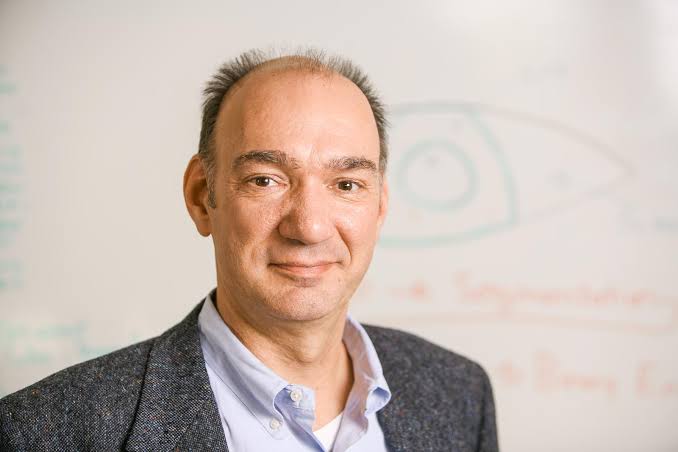
 Speaker: Kevin W. Bowyer, University of Notre Dame, Indiana
Abstract: 1-to-N face matching is the algorithmic engine in finding an investigative lead using a probe image from a frame of surveillance video. When the person in the probe image is not in the gallery, any result from 1-to-N facial ID has to be a false identification. Detecting out-of-gallery probes has potential to reduce wasted investigative effort and reduce wrongful arrests. We discuss new approaches to detecting when a 1-to-N facial ID is out-of-gallery. Our approaches do not use the similarity score between images. We evaluate the accuracy of our approaches on probe images that are blurred or low resolution, as well as on mugshot-quality probes.
Bio: Kevin Bowyer is the Schubmehl-Prein Family Professor Emeritus at the University of Notre Dame. He is a Fellow of the AAAS “for distinguished contributions to the field of computer vision and pattern recognition, biometrics, object recognition and data science”, a Fellow of the IEEE “for contributions to algorithms for recognizing objects in images”, and a Fellow of the IAPR “for contributions to computer vision, pattern recognition and biometrics”. Professor Bowyer has served as Editor-In-Chief of both the IEEE Transactions on Pattern Analysis and Machine Intelligence and the IEEE Transactions on Biometrics, Behavior, and Identity Science. Professor Bowyer has also served as General or Program Chair of conferences such as Computer Vision and Pattern Recognition, Winter Conference on Applications of Computer Vision, Face and Gesture Recognition, and the International Joint Conference on Biometrics.
 Title of the Talk: Face, Body, and Person Identification in Real-world Viewing Conditions